
Letting Ideas Breathe: A Conversation with Visual Storyteller Tsveta Petrova
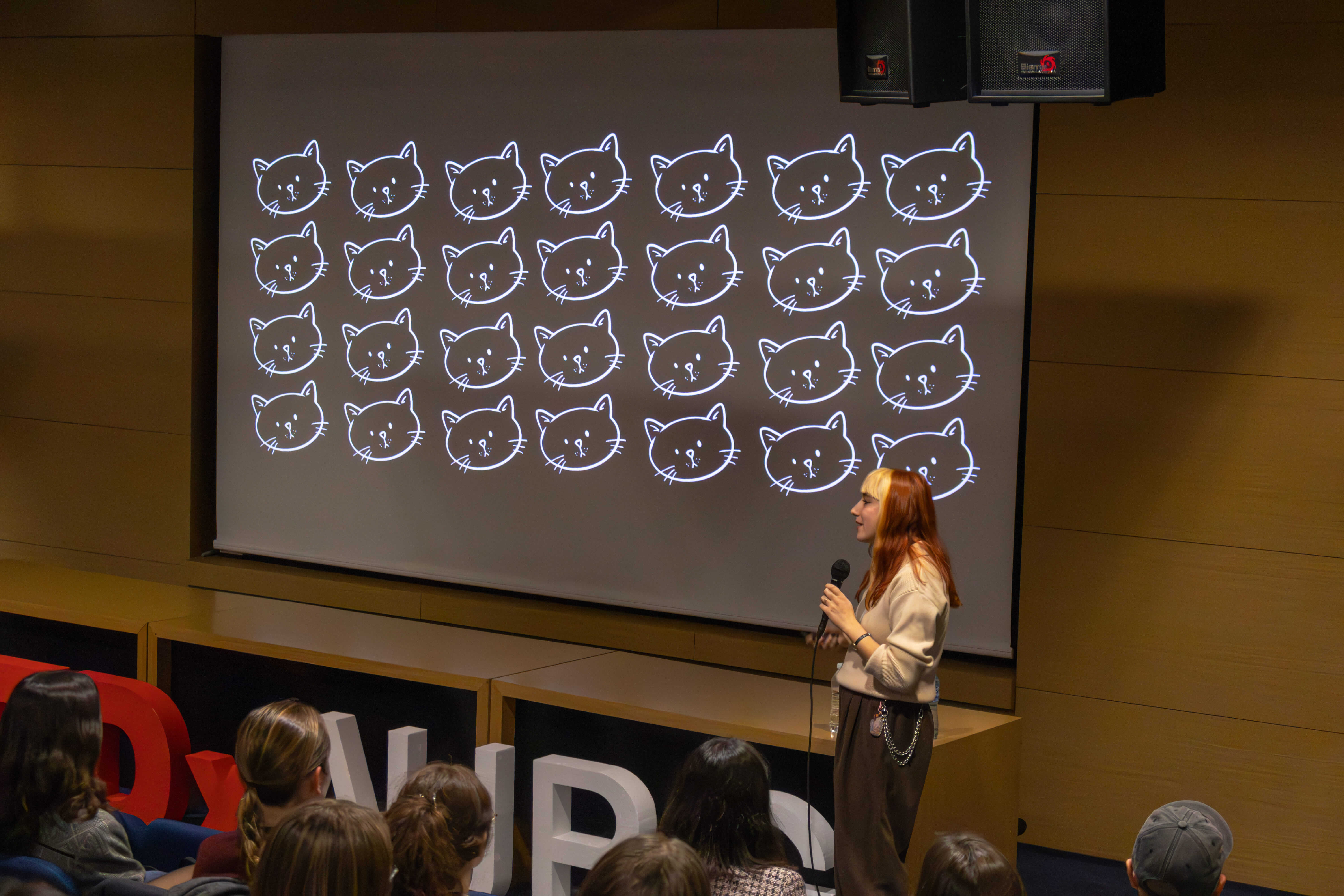
When people talk about public speaking, the spotlight often falls on rehearsal, structure, and delivery. But there’s another equally powerful approach - one rooted in intuition, genuine presence, and the ability to connect without overcomplicating the moment.
At this year’s TEDxAUBG Workshop, illustrator and educator Tsveta Petrova brought that exact perspective. Known for turning ideas into visual narratives through Clementine Draws and her comic series Mara the Witch, Tsveta approaches communication the way she approaches illustration: with clarity, awareness, and an instinctive understanding of how ideas land with an audience.
Her insights weren’t about “doing less” - they were about focusing on what actually matters.
“I don’t have rituals. I just try not to overthink.”
Before a speech, many speakers go through strict routines to steady themselves. Tsveta, meanwhile, treats it lightly.
“I barely ever present. I don’t have a ritual. I just keep my main points in mind and don’t think about it too much.”
It’s disarmingly simple,
and it works because it’s hers - not a formula, not a “best practice,” just a way of staying grounded in her own mind rather than spiralling into performance.
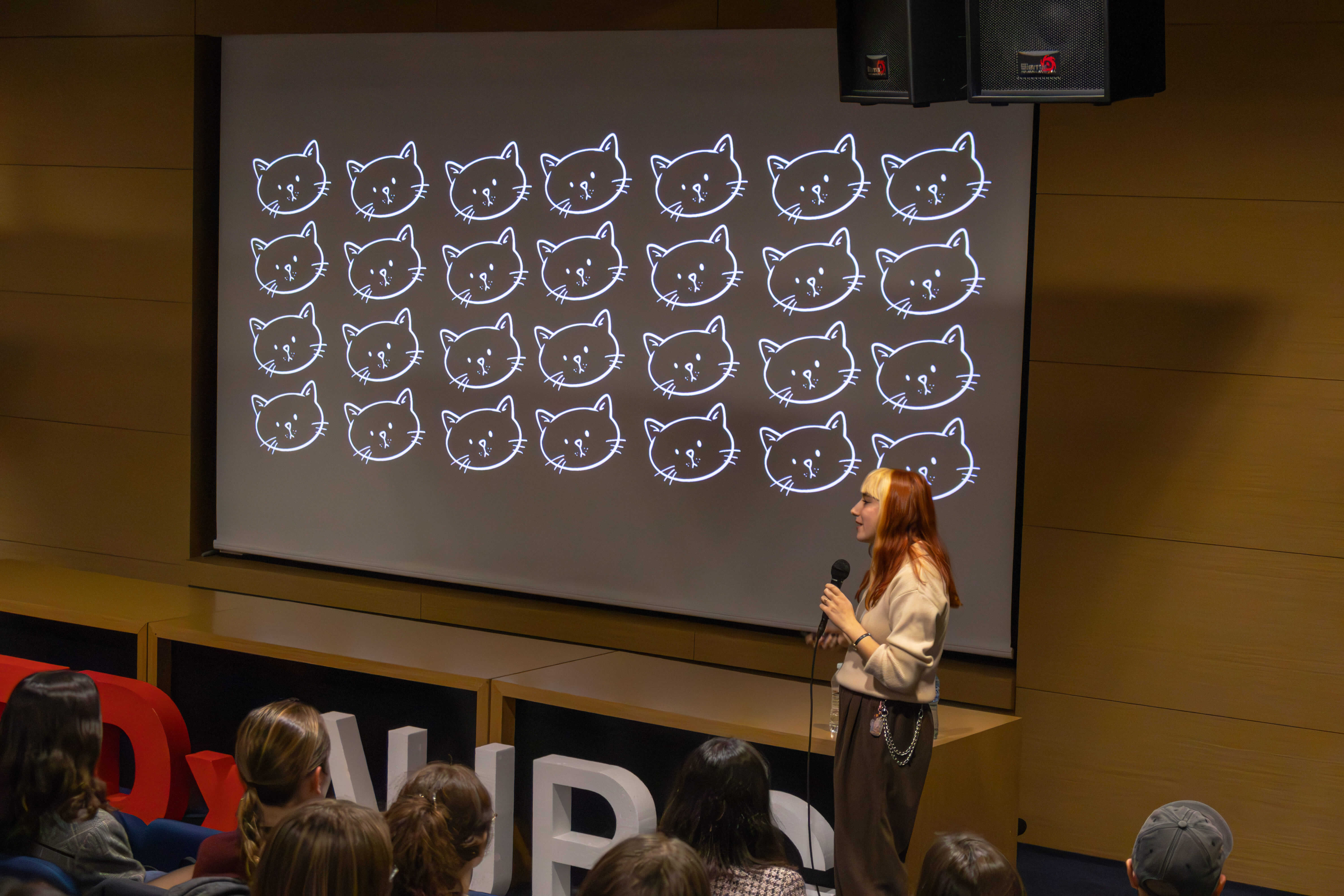
Being present instead of perfect
When she speaks, she focuses on the room rather than on herself:
“I try to look at the people and feel the room.”
She admits her mind sometimes wanders - as everyone’s does - but instead of panicking, she redirects:
“If it happens, I just wrap it up and get back to the point.”
There’s a calm practicality to it, as if she’s narrating the experience of tying a loose thread rather than confronting a crowd.
Learning by observing, not performing
Public speaking isn’t her daily practice - illustration is.
So the workshop itself became a learning moment:
“I learned a lot today from the other speakers. It’s not something I do often, so being at an event dedicated to speaking taught me a lot.”
It’s refreshing to hear someone from the creative world admit this so openly:
You don’t need to be a natural speaker to understand communication.
You just need to pay attention.
The core of a good speech? Your energy.
When we asked what makes a good speech, Tsveta’s answer came with a half-smile:
“I’m not an expert, but I think the key is to be calm and not worry too much. That energy projects to the audience - and they’re not going to kill you.”
There’s humour in it, but also truth:
Your nervousness becomes theirs.
Your ease becomes theirs.
People mirror the energy you bring.
For visual presentations, her advice is even clearer:
“Keep. It. Simple.”
Coming from an illustrator, simplicity is not minimalism - it’s intentionality.
For new speakers: break big things into small ones
Asked what she would tell someone just starting with public speaking, Tsveta leaned into practicality:
“If something feels overwhelming, break it into little pieces. Run through it alone or with friends - whatever makes you feel like you’ve said it at least once.”
Her own process is solitary:
“I only practice alone. Everyone has their own way.”
It’s a reminder that preparation doesn’t have to look grand.
It just has to look like you.
“Any idea can be big enough.”
And what about those who want to give a TEDx talk but feel their idea is too small?
Her answer shifts the whole perspective:
“Any idea can be presented as big enough if you learn how to argue it. I once listened to a speech where the speaker said nothing - literally nothing - but made it sound smart. Even the smallest idea can be shaped into something meaningful.”
It’s not about the size of your idea.
It’s about how deeply you explore it.
Tsveta’s presence at the TEDxAUBG Workshop wasn’t centred on formulas or step-by-step guidance - it was about offering a different way of approaching a speech: think visually, stay grounded, and don’t bury your message under unnecessary complexity. She made one thing very clear: YOU are the centre of your own presentation. If you fade out, the message does too.